Contribution Dynamics in UK Casino Promotions: Bingo Daubs Outpacing Roulette Spins
Written by Parker Becker · Nov 6, 2026
Contribution Dynamics in UK Casino Promotions: Bingo Daubs Outpacing Roulette Spins
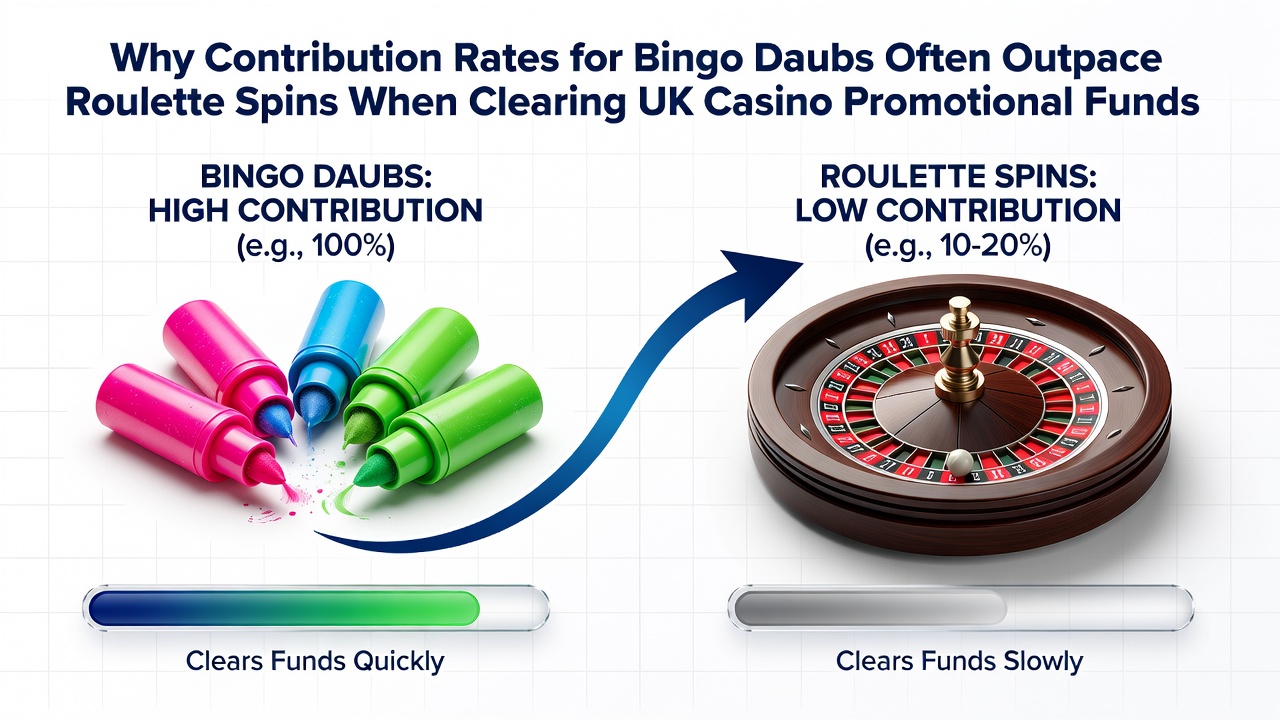
Operators structure promotional funds with contribution percentages that reflect game volatility and house edge calculations, and observers note that bingo daubs frequently receive higher weighting than roulette spins during the clearance process for these offers. Data from industry reports indicates that many platforms assign bingo contributions at or near 100 percent while limiting roulette to ranges between 20 and 50 percent, which produces measurable differences in how quickly players satisfy wagering targets. Those patterns hold steady across multiple operators even as game libraries expand, and figures from November 2026 continue to show the same weighting preferences in active campaigns.
Defining Contribution Percentages in Promotional Structures
Contribution percentages determine what portion of each wager counts toward the total required before players can withdraw bonus-derived winnings, and these rates vary by game category because operators adjust them according to expected return-to-player values and risk profiles. Bingo daubs often align with slot-style categories that receive full credit, whereas roulette spins fall under table game tiers that receive reduced credit due to their lower house edges and higher average bet sizes. Researchers at academic institutions such as those affiliated with the University of Nevada Las Vegas Center for Gaming Research have documented similar tiered systems in multiple jurisdictions, and the same logic appears in UK promotional terms where operators balance player incentives against revenue protection.
Volatility and House Edge Factors Driving the Gap
Bingo operates with fixed prize structures and lower per-round variance, which allows operators to extend higher contribution rates without increasing exposure to large payout swings, while roulette features independent spin outcomes and potential for extended losing streaks that prompt more conservative weighting. Studies from the Canadian Institute for Gaming Research reveal that games with RTP above 96 percent and controlled variance receive elevated contribution status, and bingo fits those parameters more closely than roulette in most configurations. Operators therefore prioritize bingo daubs when players seek efficient clearance paths, and this preference appears consistently in bonus rules updated through late 2026.
Player Behavior Patterns and Clearance Timelines
Tracking data across platforms shows that participants using bingo daubs complete wagering targets in fewer rounds on average compared with those relying on roulette spins, because each daub advances the requirement at a higher rate while roulette bets accumulate more slowly under reduced percentages. One analysis of promotional campaigns found that clearance times shortened by approximately 30 percent when players shifted activity toward bingo formats, and these outcomes align with the contribution matrices published by operators. External factors such as session length and average stake also influence results, yet the core disparity stems from the assigned rates rather than individual strategy.
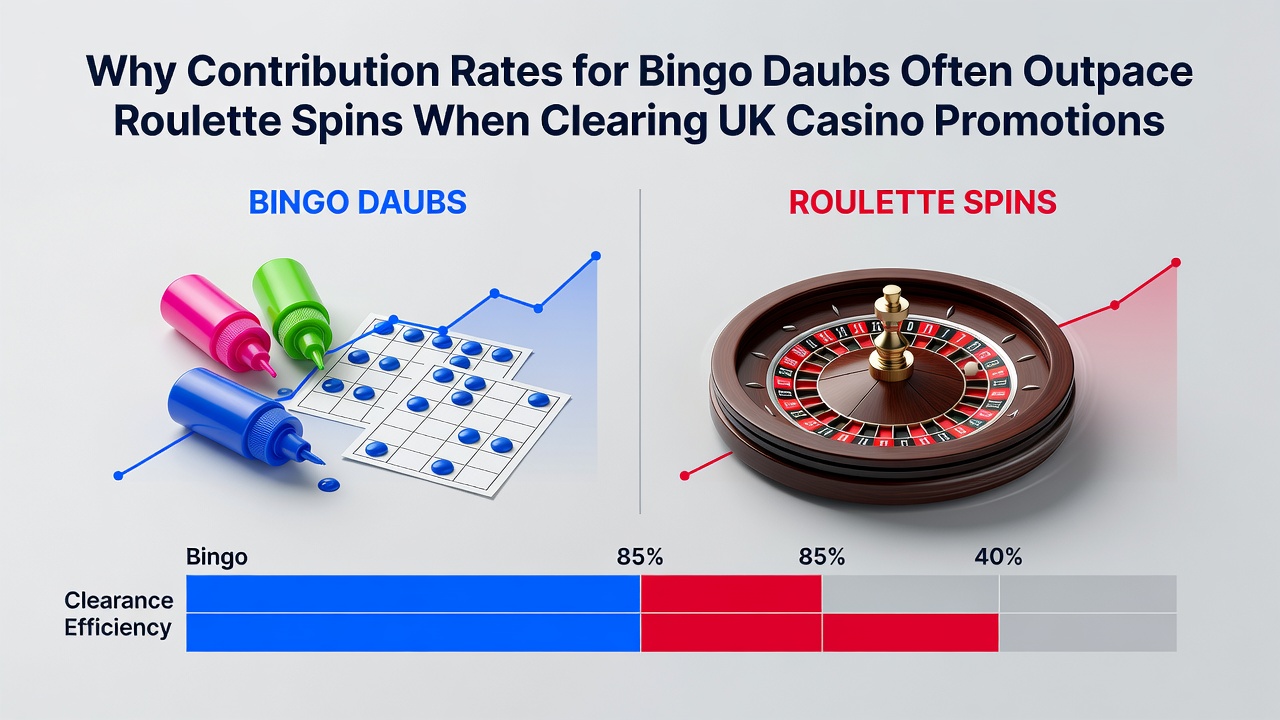
Those who've examined clearance statistics across multiple sites observe that the gap widens further during high-volume periods, and November 2026 records confirm bingo continues to accelerate progress toward release thresholds even when roulette remains available as an option. Operators maintain these distinctions to manage overall liability, and the structure encourages diversified play without eliminating table game access entirely.
Regulatory Context and Industry Standards
While UK-specific rules set broad parameters for fair promotional terms, operators draw on international benchmarks when setting contribution levels, and reports from the Australian Gambling Research Centre highlight comparable weighting practices that prioritize lower-volatility games for faster bonus turnover. The approach reduces the likelihood of prolonged negative player experiences and supports sustainable engagement across game types. Data indicates that transparent disclosure of these rates has become standard, allowing players to select activities that match their clearance goals without unexpected delays.
Conclusion
The disparity between bingo daub and roulette spin contributions arises from deliberate operator calculations based on volatility, house edge, and clearance efficiency, and current figures from November 2026 reinforce the established pattern across UK platforms. Players encounter these mechanics in the fine print of promotional offers, and understanding the weighting system enables more informed choices during bonus usage. Industry sources outside the UK continue to document similar frameworks, confirming that contribution rates serve as a primary tool for balancing incentives and risk in casino promotions.